
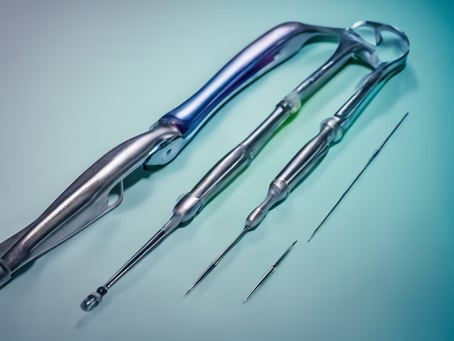
Orthopedic joint replacement surgery is a procedure that removes damaged or worn-out parts of a joint and replaces them with artificial implants designed to restore function, reduce pain, and improve mobility. Knee and shoulder replacements are among the most common procedures performed to help patients regain an active lifestyle.
Shoulder Replacement Surgery
Shoulder replacement surgery involves replacing the damaged ball-and-socket joint with a prosthetic implant to restore movement and eliminate pain, often recommended for patients with severe arthritis, rotator cuff tears, fractures, or chronic shoulder pain that limits daily activities.
Types of Shoulder Replacements:
- Total Shoulder Replacement – Both the ball (humeral head) and socket (glenoid) are replaced with artificial components.
- Reverse Shoulder Replacement – The ball and socket positions are reversed to improve stability, typically for patients with severe rotator cuff damage.
- Partial Shoulder Replacement – Only the damaged humeral head (ball) is replaced while keeping the natural socket intact.
Shoulder replacement offers significant pain relief, improves range of motion and function, restores the ability to perform daily activities, and provides long-lasting results with durable implants.
Knee Replacement Surgery
Knee replacement surgery involves removing damaged cartilage and bone in the knee joint and replacing them with metal and plastic implants to restore smooth movement, commonly performed for osteoarthritis, rheumatoid arthritis, or knee injuries that cause chronic pain and stiffness.
Types of Knee Replacements:
- Total Knee Replacement (TKR) – The entire knee joint is replaced with artificial components.
- Partial Knee Replacement (PKR) – Only the damaged portion of the knee is replaced, preserving healthy bone and ligaments.
- Robotic-Assisted Knee Replacement (MAKO Technology) – Uses robotic precision to ensure optimal implant placement for a more natural feel.
Knee replacement provides long-term pain relief, restores function and mobility, improves quality of life and daily activities, and, with minimally invasive options, allows for faster recovery.
Who Is a Candidate for Joint Replacement?
If you experience chronic joint pain, stiffness, or limited mobility that doesn’t improve with non-surgical treatments like physical therapy or injections, you may be a candidate for shoulder or knee replacement surgery.
Joint replacement can be life-changing, allowing you to move more freely, engage in activities you enjoy, and live with less pain and better function.
