
Minimally invasive orthopedic procedures are designed to reduce pain, speed up recovery, and restore mobility with smaller incisions and less disruption to surrounding tissues. These advanced techniques are commonly used for knee, shoulder, and overall joint conditions related to sports injuries, arthritis, or wear and tear. Below are some minimally invasive procedures that may be an option for patients looking to return to an active lifestyle with less downtime.
Arthroscopy (Knee, Shoulder, Hip, Ankle, and Elbow)
Arthroscopy is a minimally invasive procedure that uses a small camera (arthroscope) inserted through tiny incisions to diagnose and treat joint issues. It can repair ligament tears (ACL, meniscus, rotator cuff), remove damaged cartilage, and smooth out bone spurs. This technique offers significant benefits, including less scarring, faster recovery, and reduced pain compared to open surgery.
PRP (Platelet-Rich Plasma) Therapy
Platelet-Rich Plasma (PRP) therapy uses a patient’s own concentrated platelets to promote natural healing and tissue repair. It is commonly used for tendon injuries, ligament tears, and osteoarthritis in the knee, shoulder, and other joints. PRP therapy can speed up recovery, reduce inflammation, and may even delay or prevent the need for surgery.
Stem Cell Therapy (Regenerative Medicine)
Stem cell therapy involves harvesting stem cells from the patient, typically from bone marrow or fat, and injecting them into the damaged area to promote natural regeneration. This treatment helps repair cartilage, tendons, and ligaments, potentially improving function, relieving pain, and slowing joint degeneration.
Ultrasound-Guided Injections
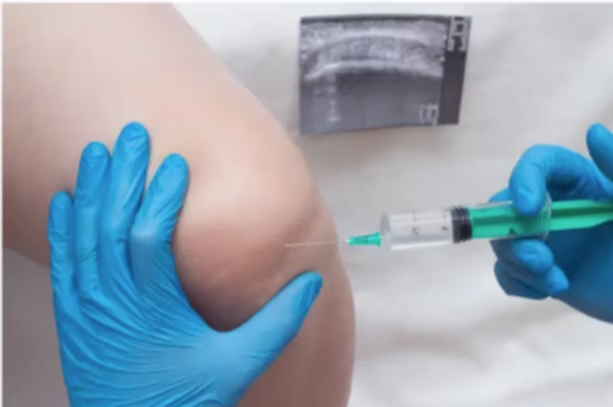
Ultrasound-guided injections deliver corticosteroids, hyaluronic acid (gel injections), or biologics (PRP, stem cells) directly into the affected joint or tendon for precise treatment. Commonly used for shoulder impingement, knee osteoarthritis, and bursitis, these injections provide targeted pain relief and improve joint function with minimal downtime.
Meniscus Repair & Partial Meniscectomy (Knee)
Meniscus repair involves using arthroscopy to stitch torn cartilage together, while a partial meniscectomy trims damaged cartilage while preserving as much healthy tissue as possible. Both procedures help restore knee function, reduce pain, and maintain joint stability.
Rotator Cuff & Labrum Repair (Shoulder)
Arthroscopic techniques are used to repair torn tendons, such as the rotator cuff, or to stabilize the shoulder by fixing the labrum. These minimally invasive procedures result in less pain, improved range of motion, and faster rehabilitation compared to traditional surgery.
Partial Knee Replacement (Minimally Invasive Robotic-Assisted Surgery)
Partial knee replacement preserves healthy bone by replacing only the damaged portion of the knee using robotic-assisted technology for enhanced precision. This approach allows for faster recovery, smaller incisions, and more natural knee movement.
Shoulder Labral & Biceps Tenodesis Repair
Labrum repair and biceps tenodesis involve fixing labrum tears or reattaching the biceps tendon to a new location to relieve pain and improve strength. These procedures restore shoulder function while minimizing surgical trauma.
